
Skip to content Skip to main navigation Skip to footer

Category

Uncategorized

Trust Me Fam, Trust Falls Are Fun but Trust Funds Are Better!

Protecting Legacy, Simplifying Transitions, and Strengthening the Hicks Family for Generations

As the Hicks Family continues to expand, excel, and build new chapters of legacy, the way we plan for our futures carries just as much importance as the ways we celebrate our past. One of the most impactful steps any household can take—regardless of age, income, or family size—is establishing a family trust. While the term may sound like something only the wealthy need, trusts are extremely practical tools for everyday families who want to protect their assets, reduce stress for loved ones, and ensure that their wishes are honored without unnecessary delays or legal challenges.

Keep reading to learn a little about the concept of trusts, why a revocable living trust is often the best starting point, and how to begin the process.


Understanding the Types of Trusts

While there are several types of trusts, most households encounter the following:

Revocable Living Trust

A revocable living trust is a legal document that allows you to place your assets under the ownership of a trust while you are still alive—and, importantly, still maintain full control. You can add or remove assets, change beneficiaries, or dissolve the trust entirely at any time.

Irrevocable Trust

Once created and funded, an irrevocable trust cannot be changed without beneficiary consent. These trusts are often used for tax planning, protecting assets from creditors, or setting aside resources for long-term care.

Testamentary Trust

A testamentary trust is created after your death through instructions in your will. Unlike a revocable trust, a testamentary trust still requires probate.

While all of these serve different purposes, the revocable living trust is the most commonly used by families who want flexibility, clarity, and peace of mind.


Why Revocable Living Trusts Matter

A revocable living trust can be one of the most thoughtful gifts you leave for your family. It offers a range of benefits that make estate planning easier to accomplish. The following lists five reasons to consider this tool:
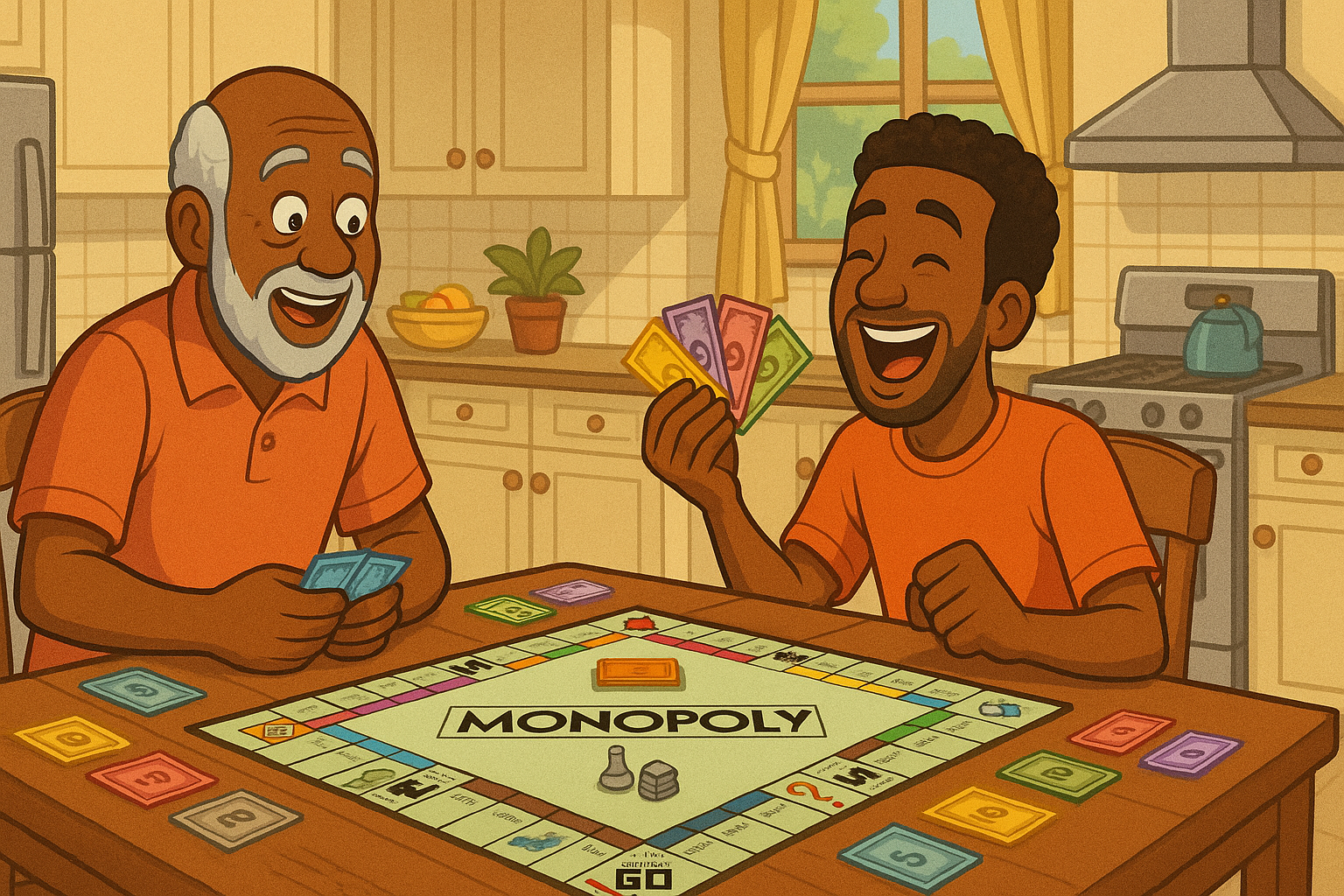
Trust Fund Monoply

1. Avoiding Probate Court

Without a trust, your estate typically goes through probate, a court-supervised process that can take months—or even years—depending on complexity and state laws. Probate can freeze bank accounts, delay access to funds needed for everyday living, and expose personal financial information to the public record. Families often describe probate as emotionally draining and financially burdensome, especially during a time when they are already grieving.

A well-structured revocable trust allows assets to transfer smoothly and privately, sparing your loved ones from unnecessary legal complications.

2. Keeping Control

Because the trust is revocable, you maintain full decision-making authority during your lifetime. You can update your instructions as your family grows, your goals evolve, or your assets change.

3. Protecting Your Family From Conflict

Even strong families can experience tension when a loved one passes away without clear direction. A trust provides structure, clarity, and documented wishes that prevent misunderstandings, reduce conflict, and protect relationships.

4. Managing Assets if You Become Incapacitated

A revocable trust can also include plans for how your assets should be managed if you become ill or unable to make decisions. Instead of leaving family members guessing—or disputing—your wishes, the trust outlines exactly who will step in and how matters will be handled.

5. Covering a Wide Range of Assets

A family trust can include nearly anything of value, such as:

  • Your home and other real estate
  • Bank accounts and CDs
  • Vehicles
  • Family businesses or side-hustle revenue
  • Retirement accounts (with proper beneficiary coordination)
  • Life insurance policies
  • Investment accounts
  • Jewelry, heirlooms, and sentimental items
  • Digital assets (domain names, online businesses, photos, social media instructions)

Every household is different, but most families discover they have far more to protect than they realized.


What Happens If You Don’t Plan Ahead

Families that do not set up a trust often face:

  • Lengthy probate delays (sometimes 6–18 months or longer)
  • Costly legal fees that reduce the value of the estate
  • Court involvement in distributing assets
  • Frozen accounts and limited access to funds
  • Family disputes over property, responsibility, or sentimental items
  • State-determined outcomes, which may not align with your wishes

The good news is that all of this is preventable with proper preparation.
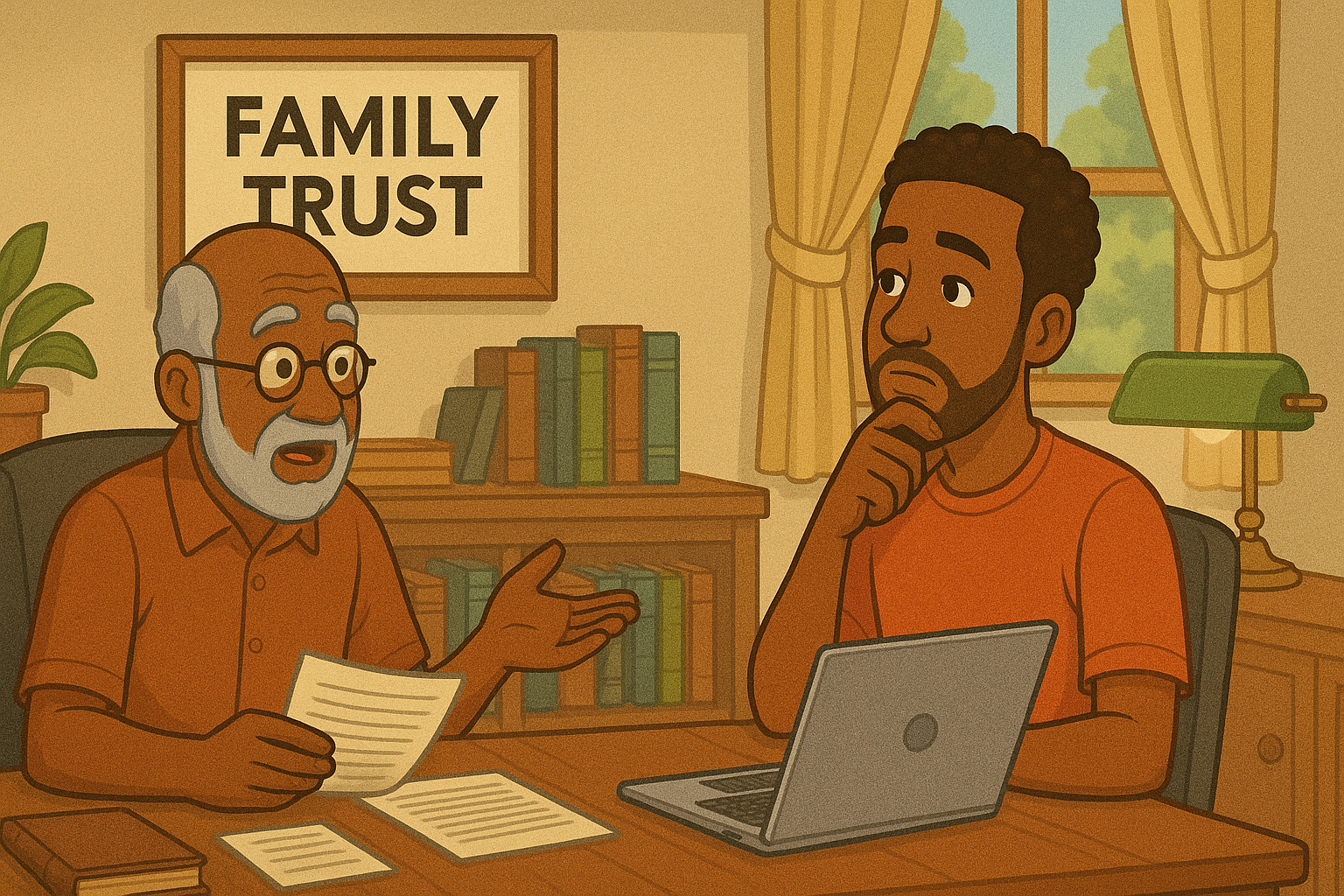

Trust_Fund_Chat

Getting Started: First Steps to Setting Up a Trust

  1. List your assets — big and small.
  2. Decide who you want to receive what and under what conditions.
  3. Choose a trustee who will manage your trust when you can’t.
  4. Select backup trustees in case your first choice is unavailable.
  5. Meet with an attorney or estate-planning professional to draft the trust documents.
  6. Sign and notarize your trust once finalized.
  7. Fund the trust by transferring titles, deeds, and accounts into its name.
  8. Review your trust annually or when major life events occur.

Protecting Our Legacy Together

Establishing a family trust is not just a financial decision—it’s an act of love and leadership. As a family rooted in resilience and forward thinking, the Hicks legacy is strengthened when each household takes steps to protect what they’ve built and prepare the next generation for success.

Every situation is unique, so before moving forward, it’s wise to consult with a qualified estate-planning attorney or a certified financial planner (CFP) who can guide you through the process and help craft the best plan for your household.

Let’s continue building a future that honors those who came before us and empowers those who will follow.

Read more

Game On! The Best Board Games for Every Age & Every Home

Board games are a timeless way to bring people together, spark laughter, and ignite some friendly competition. Whether you're entertaining toddlers, teens, or grandparents, there's a perfect game for every age group. Here's your go-to guide for fun that fits the whole family!

For Young Kids (Ages 3–7):

  • Candy Land – A colorful adventure for little ones learning colors and turns.
    Available at Target, Walmart, and Amazon
  • Outfoxed! – A cooperative mystery game that encourages problem-solving.
    Available at Barnes & Noble and Amazon

For Tweens & Teens (Ages 8–16):

  • Ticket to Ride – Build railways across the country while learning strategy and geography.
    Available at Target, Walmart, and Amazon
  • Codenames – A word association game that keeps everyone thinking and guessing.
    Available at Barnes & Noble and local game shops

For Adults & Mixed-Age Groups:

  • Catan – A classic game of trading and building that’s perfect for family strategy nights.
    Available at Amazon, Target, and specialty game stores
  • Telestrations – Like telephone, but with drawings—hilarious fun for all ages.
    Available at Walmart, Amazon, and GameStop

For the Whole Extended Family:

  • Uno or Uno Flip – A fast-paced card game with endless surprises.
    Available everywhere games are sold
  • Pictionary Air – A tech twist on the drawing game that gets everyone moving.
    Available at Walmart, Target, and Amazon

Let the Games Begin!

No matter your age or game style, there's a board game out there to keep the fun rolling.

Do you own or have you played any of these games? Tell us in the comments!
🎲 What’s your all-time favorite board game? Share below!
🎉 Challenge: Pick up a new game from this list, invite family over, and host your next unforgettable game night!

Read more

Honoring Andre: A Family’s Reflection on ‘The Residence’ Tribute to Our Very Own A.B.

As a member of Andre's family, watching the final episode of the whodunit series The Residence on Netflix was a profoundly moving experience. In my opinion, the show was well written and for the most part, well executed by an amazing cast led by Uzo Aduba, best known for her unique role in Orange is New the Black. But for all the action taking place in each of the series’ eight episodes, I was most moved by the part with no action or dialogue—the closing tribute, a simple yet powerful acknowledgment—"In memory of Andre Braugher".  Seeing those words on the screen epitomized the deep respect and affection the cast and crew held for him.

The Residence is a captivating murder mystery set within the intricate corridors of the White House. The series follows detective Cordelia Cupp, portrayed by Uzo Aduba, as she unravels the complex web surrounding the murder of the White House Chief Usher during a state dinner. Andre was originally cast as the Chief Usher, A.B. Wynter, a role that resonated deeply with his commanding presence and nuanced acting. Tragically, after completing several episodes, Andre passed away in December 2023. The production faced the daunting task of recasting, and Giancarlo Esposito, a close friend of Andre, stepped into the role to honor his legacy.​

Giancarlo's decision was not made lightly. He expressed, "To step in for someone as iconic as he was, but one who I had a personal relationship with, was a difficult decision to make... I realized that Andre was still with us. And if I allowed myself to honor him in playing this character, all would be well." ​

Uzo Aduba, reflecting on Andre's impact, shared, "He's one of our greatest actors. In my opinion, he's always been exceptional, with an impressive ability both artistically and technically. It was a true joy."

Series creator Paul William Davies highlighted the collective grief and admiration within the team: "We all loved him and he loved the show."

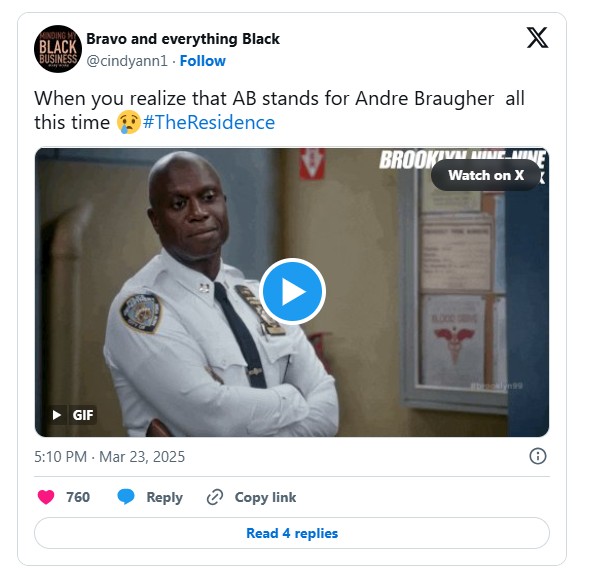
Twitter User commenting about the moment they realize that AB stands for Andre Braugher.

The tribute at the series' conclusion was a heartfelt gesture, ensuring that Andre's contributions were recognized and remembered. As his family, we are deeply touched by the outpouring of love and respect from his colleagues. Andre's passion for storytelling and his dedication to his craft have left an indelible mark on all who knew him and on audiences worldwide. The Residence stands as a fitting testament to his remarkable talent and enduring legacy.​

For those who wish to witness this poignant homage, The Residence is currently streaming on Netflix.

Read more

“The Dark Side of DNA Testing: Why You Should Delete Your 23andMe Data Now”

Hey Hicks Fam! Just stopping by to share a bit of info about the embattled company 23andMe and why you might want to delete your account and reconsider using genetic testing sites.

Founded in 2006 by Anne Wojcicki, Linda Avey, and Paul Cusenza, 23andMe emerged as a trailblazer in direct-to-consumer genetic testing. The company's name reflects the 23 pairs of chromosomes in human DNA. Headquartered in Sunnyvale, California, 23andMe rapidly gained prominence, offering individuals insights into their ancestry and genetic health risks through simple at-home saliva kits. At its peak, the company boasted over 15 million customers and secured partnerships with pharmaceutical giants like GlaxoSmithKline, which invested $300 million in 2018 to leverage 23andMe's vast genetic database for drug development. ​

Despite its initial success, 23andMe faced mounting challenges. In 2013, the FDA temporarily halted its health-related genetic reports due to regulatory concerns. More critically, a significant data breach in 2023 compromised the personal information of approximately 6.9 million users, severely tarnishing the company's reputation. These setbacks, coupled with declining sales and legal entanglements, culminated in 23andMe filing for Chapter 11 bankruptcy in March 2025. ​

The bankruptcy has ignited widespread apprehension regarding the fate of the sensitive genetic data amassed by 23andMe. Privacy advocates and legal experts warn that in the event of an acquisition, new ownership might exploit this data in unforeseen ways, potentially impacting areas like insurance underwriting and employment. Given the limited protections offered by laws such as the Genetic Information Nondiscrimination Act (GINA), customers are increasingly vulnerable to potential misuse of their genetic information. ​

In light of these developments, it is prudent for former 23andMe users to proactively safeguard their genetic data by deleting their accounts and associated information. To do so, follow these steps:​

  1. Log into your 23andMe account: Access the platform using your credentials.
  2. Navigate to Account Settings: Click on your profile name or icon, typically located in the upper-right corner, and select "Settings" from the dropdown menu.​
  3. Access Data Management Options: Scroll down to find the "23andMe Data" section and click on "View."​
  4. Initiate Data Deletion: Within this section, locate and select the option labeled "Permanently Delete Data."​
  5. Confirm Deletion Request: You will receive an email from 23andMe to verify your deletion request. Confirm the action by following the instructions provided in the email.​

By taking these steps, you can mitigate the risk of your genetic information being misused in the wake of 23andMe's uncertain future. ​Some customers, however, are choosing to retain their data with 23andMe, citing potential benefits for medical research and personal health insights. They argue that their genetic information could contribute to scientific advancements and that the company's existing privacy measures are sufficient. Additionally, some users believe that the potential risks are outweighed by the value of personalized health information and ancestry insights they receive.

Ultimately, the decision to delete or retain one's genetic data is a personal one, weighing the potential benefits against the risks in the context of 23andMe's current situation. Be careful!

Read more